Some Things Never Change

By Robert Witmer
Tokyo, Japan

I get in line with the seabirds. They seem to be looking at their reflections in the thin film of water behind the retreating wave. So I look down. There I am. In a baggy bathing suit with a snorkel in my left hand. It’s hot, and the water smells like gasoline. A kid runs by and the birds scatter. There I am. In a baggy bathing suit – all alone.

a bald tire
on a patch of ice
the world turns

First published in The Other Bunny, January 6, 2025.

The Gardens of Antarctica

By Robert Witmer
Tokyo, Japan

The gardens of Antarctica breathe free. Free of the hideous white. A dense green silence remembers the blinking ice. Dewdrops heavy as stones hung about the neck. The overpowering poetry of tears.

summer
the millstone
ginding
the donkey

First published in Sunrise in a Rabbit Holepublication date November 3, 2025, Cyberwit.com.

Tide Ledger

By David Anson Lee
Bellaire, Texas, United States

We keep a ledger of small losses: one slipper at the pier, two gull nests, ten breaths of air no one thought to save. The ledger rides in the pocket of a coat that remembers salt: buttons looped with a child’s braid, a coin pressed thin as a fossil.

Once a year we walk the shoreline and record what the tide returns: a plastic comb, a glass bead, a photograph of a town no longer printed on any map. We bury each entry in a jar and plant a willow above it.

The willow grows as though sounding the names aloud.

Dispatch from the Thinning

By David Anson Lee
Bellaire, Texas, United States

They said our town still had a forest, though it clung to the highway like a frayed sleeve. At dawn the trucks came, counting trunks the way bankers count coins, and left behind a geometry of stumps the birds could not decipher. The library taped a notice to its glass: “Community Meeting. Seeds Needed.” Women arrived with seed packets folded like blessings. Children wrote tree names on scraps of paper, as if naming could mend the thinning air. We planted where runoff carved salt into the soil and hoped the roots could read our intentions.

dawn over drainage:
someone scatters sunflower seed
as if feeding stars

Building a Birdhouse

Robert Witmer
Tokyo, Japan

That stuff is for the birds, the builder says, when I point out the loss of shade where the trees would be. He is coming from a power lunch with the architect, a former tightrope walker in his father’s circus. Seems like there was a discussion about an extension to the go-kart track. Noise pollution, apparently. What about electric karts, I say, and an aviary just before the final turn? Fat chance, he says. That little hole in front, beneath the red-peaked roof, is too small for the kid’s albatross.

First published in Sunrise in a Rabbit Holepublication date November 3, 2025, Cyberwit.com.

Atlas of Small Things

By David Anson Lee
Bellaire, Texas, United States

When the last map burned,
we traced new roads from thumbprints:
salt in the seams,
a country stitched by small hands.

A child learns the coast
by listening for gulls;
an older woman counts orchards
the way she once counted prayers.

Every mouth carries a river’s memory:
names of fish, the taste of rain.
We lift the globe like a bowl,
tilt it until teaspoons of light
slide into the cracked places
and teach the wounds
how to flower.

A Southern Woman Nails Up Her Theses


Rebecca Drouilhet
Picayune, Mississippi, USA

I have an announcement to make: It’s the end of the line for idiotkind. The Civil War ended 157 years ago, and if you can’t understand that, get off my train. I’m going on without you. We need to leave our ancestors in their historical time. Some in our society are trying to resurrect the Confederacy and its symbols, not to honor their ancestors and to learn from them, but to build new nightmares, using the worst of the past to create bizarre new mutations with the potential to destroy the last 157 years of progress toward a more equitable society. Their project has the potential to engulf the vibrant present and create a horrific future, not only for those who were disadvantaged at the time of the Confederacy, but also for the heirs of the Confederacy themselves. Those heirs need to go into the future disentangled from the tentacles of a past that no longer serves them or their society and which deprives them of the chance to go forward, making new choices and entering the future. And we need to be shrewd enough to recognize that many who have no historical ties with the Confederacy are attempting to appropriate its culture and symbols for no good end.

We live in a world of increasing complexity. And because we have no historical precedents to guide us in how to choose wisely from the myriad and dangerous possibilities that now lie before us, we want to go back. We want to dig up the skeletons and taste the blood and the pain of our ancestors. We need catharsis and healing, but the past of a labor-intensive plow agricultural society may offer few clues to guide us. We are Hansel and Gretel in the woods, and the birds have eaten our breadcrumbs.

Some might perceive what I’m saying as an attack on people who have Confederate heritage, but that is not the case. Since our ancestors from that era died over a hundred years ago, none of their heirs now living have any way to go back in time and control a single choice their ancestors made, nor can they alter the context of the past or the social and economic systems that were in place at that time. To blame or scapegoat them for the sins of the past is unjust. To do so denies the reality that they, like everyone else, have undergone a tremendous amount of true social and economic change. They, like everyone else, deserve the right to go forward, living in their own times, capable of making different choices than their forbears. I post my theses now because it is imperative to turn the page of history, taking care to learn all we can from the past, while recognizing that we must go forward to create the future, no matter how frightening or disorienting that may be.

So today, I walk forward and nail my theses to an oak, unsure of where I am, in the wilderness of a new world without a road sign or a guidepost in sight.

Thesis One:

I declare war on Social Darwinism, a distortion of Darwin’s theory of survival of the fittest, which misleads so many into thinking there is a superior race, thinking that has led to so much strife, cruelty and war for dominance over the whole species by a single tribe.

waxing moon
a lone wolf joins
the pack

Thesis Two:

I embrace the concept that cooperation and win/win situations make us all stronger.

Indra’s net
a single jewel
reflects us all

Thesis Three:

I declare that knowledge alone is not enough and that the advances we make in science and technology, including our social sciences, should be tempered by wisdom and compassion for ourselves as the whole of humankind and for all other living creatures.

new horizons…
finding the brain
in the heart

It’s growing dark, and I’m still a long way from my destination. I wonder how to get back home. But step by step my feet carry me forward, moving me along second by second into the future.
Skin and Bones

Pegah Rahmati Nezhad
Tehran, Tehran province, Iran

skin and bones
with a bulging (b)elly
African child
fed up with
kwashiorkor

Depravation Darlings

By Colin James
Massachusetts

The acronym B.L.A.H.
written on the clubhouse door,
because legends are human.
I will follow you anywhere
suitably hydrated, then demobbed
in the Arizona desert.
Behold The Cave Of Reason,
much better than a dusty clubhouse
and your mother’s provincial sandwiches.
The sunsets here are dramatic,
my headaches and carpal tunnel
softly pressed between cactus flowers.

The Meaning of Color: Portrait of Else Lasker-Schuler

By Richard Weaver
San Diego, California, USA

As the Prince of Thebes, I always dress in silks 
and bright bangles. You say I am my art
living through the rapt eyes of others. 
They see Berlin or Munich in my mirror, 
but look away, embarrassed, confused 
when I enter a room because I am a Jew. 
Their laughter chases me down the street. 
Ridicule, my ungrateful friend, my servant,
my only living child, dances alongside me. 
And now you are dead. First Georg.
Now you, Franz. Why you? Why does God . . .
This war promised to free us but stains the sky daily 
with migraines. I curse it and those who wear it
on their bloated bellies, and make their hearts 
and our hope demented pincushions. You, the penultimate 
blue child, have bowed beneath bullets, suffered death 
so that we may . . . what? Live without? Die with? 
I and I not I and thou have packed what little there is,
what little is left of me that can be carried away,
and arrangements made through Switzerland 
to reach Palestine. God knows I will be unhappy there 
as a blind woman with mismatched glass eyes.
Don’t worry about me: I know this war to end all wars 
is  only the next before the next promised last.
I say goodbye now to the fixed stars and hello
to my new home, the friendless streets armed 
with dark teeth and slurs, sleepless rain and constant 
sorrow, the stone heart I carry long past its due date. 
But unlike you I am not dead. More pain must pass 
before I embrace the bitter earth. 
My heartland is not yet a river damned.

From a collection of poems written as an ekphrastic response to the German Expressionist painter, Franz Marc. Marc was stationed near Verdun, France, where nearly 1 million soldiers died. He and Wassily Kandinsky co-founded the Blue Rider movement. Marc died on March 4, 1916. 

Geologic Doom

Ashen silence molds itself
into the shape of geese drifting
on a gray lake. The angle
of their wake is acute enough
to suggest they’ll get somewhere,

despite their casual poise.
Soon they disappear in a mist
so fine we can hardly feel it
soak through and reveal our bones.
The far shore has faded away.

Maybe the planet has eroded
so its rough edge approaches us
with threats we can’t understand.
Maybe the lake is pouring into
the vacuum of absolute space.

You tire of these uncertainties
and claim we live by maps and charts
that prove the geologic doom
I fear can’t possibly happen.
Geese can happen. Loons and mallards

happen every day. But the flat earth
occurs only in certain old texts,
and even then, you note, the edge
isn’t sharp enough to harm us
unless we choose to die of fright.

Floral Derision

By William Doreski
Peterborough New Hampshire

Fragrant lilies critique the pond.
Subtleties of their punctuation
leave us gasping for response.

The water is a dirty pane of glass.
Looking at rather than through it
reveals only dinge and drab.

No wonder aquatic disdain
extends to dry land where voices
sail across wooded places

and boomerang back to intellects
that lack both form and content.
The lilies remain so aloof,

although rooted in the shallows,
that no one considers plucking them
to place in ordinary vases

in rooms where reckless children roam.
The August days simper and preen.
The pond water smell of decay

although fish and amphibians thrive
despite the threats of climate change.
The lilies gather information

to feed their impeccable poise.
Sun, rain, wind, unseasonable heat.
The force of their critique remains

until some moonless night when
they’ll fold themselves out of reach,
leaving everything vital unsaid.

Yimakh Shemo ( יִמַּח שְׁמוֹ)

by Gerard Sarnat

May his end be to be cut off; in another generation 
may their name be blotted out.
—Psalm 109 verse 13

Curse is placed
after exact name
particular enemies

of my Jewish people
–may any remembrance
also get ERASED forever:

Recent starter obviously’s Hitler
but 97-year-old mentor/Auschwitz
survivor just last week told me that she
will consider adding to list Trump and Bibi.

Annunciation

Jenny Ward Angyal
Gibsonville, North Carolina, USA

Days after the latest school shooting, I wake to the sound of shotgun blasts announcing Labor Day: open season on mourning doves. Small bodies bleeding under a stained-glass sky.

last rays—
a downy feather 
clings to my sole

Background information

Alternation of Generations

By Joshua St. Claire

They act like it didn’t happen because they don’t know that it happened.

purely for his pleasure
the beetle bursting
through the cucumber blossom

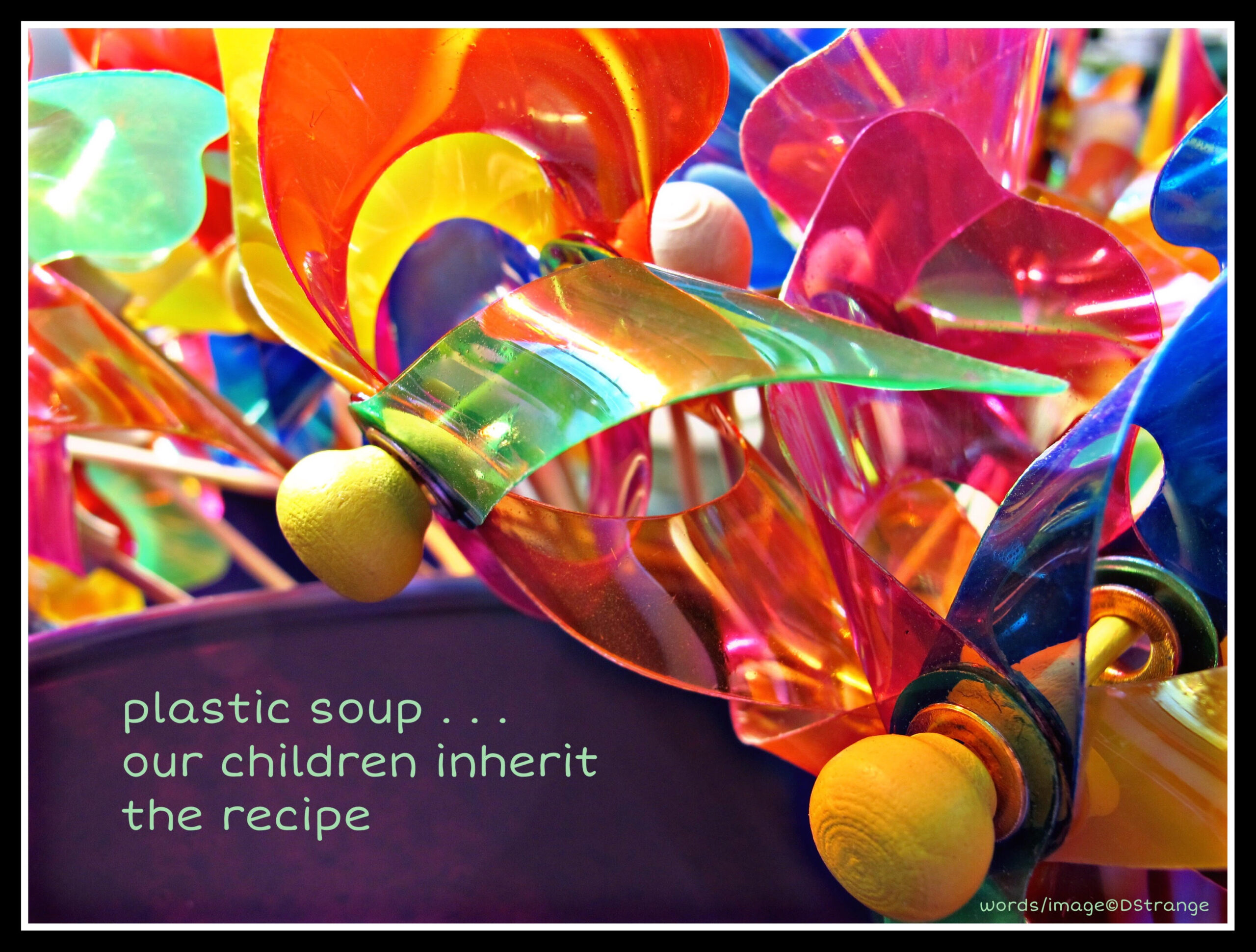
plastic soup

By Debbie Strange
Canada

Failed Haiku Journal of Senryū, Volume 3, Issue 28, April 2018

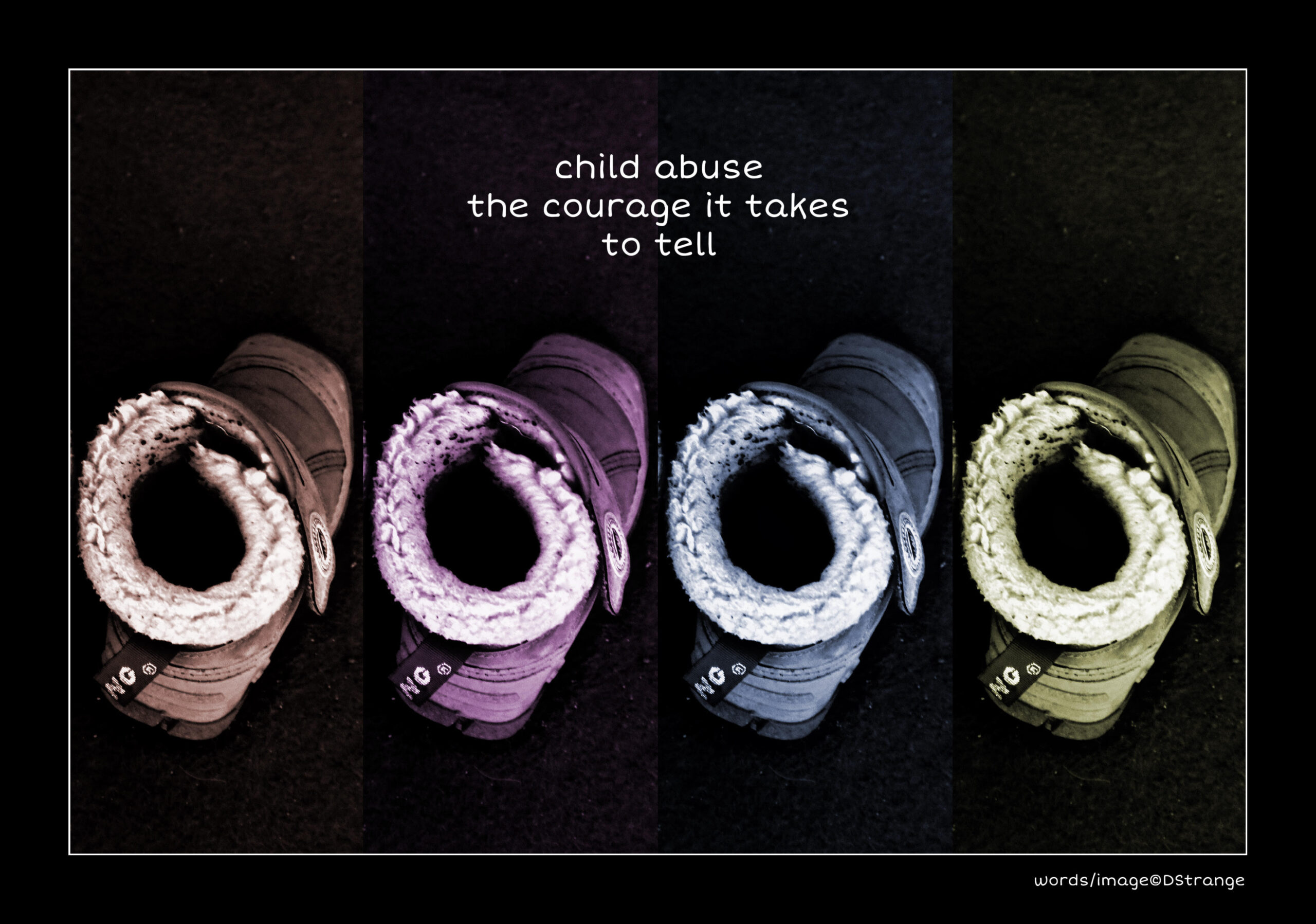
child abuse

By Debbie Strange
Canada

Failed Haiku Journal of Senryū, Volume 6, Issue 62, February 2021

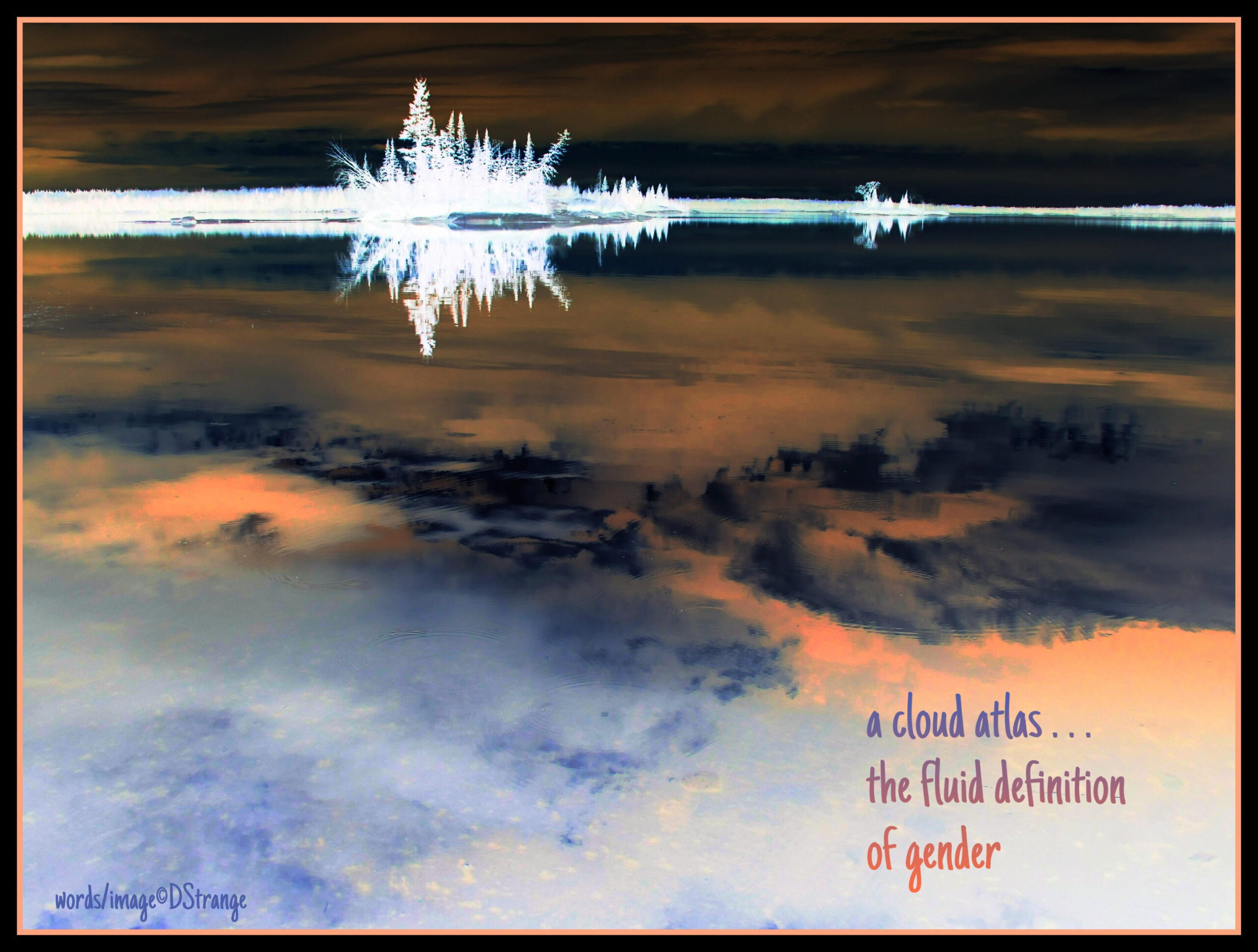
a cloud atlas

By Debbie Strange
Canada

Sonic Boom, Issue 11, April 2018

What Price Glory?

Robert Witmer
Tokyo, Japan

“If only we could placate the world’s rage with a drop of poetry or of love . . . .”
— Pablo Neruda

unemployed youth
a roll of the dice
against a brick wall

eyes shut tight
the stone sleeps
in a fist

light bleeding
through stained glass
the rubble still warm

bomb site
nothing but a staircase
beneath the pale stars

war graves
the silence
of forgetful flags

life after death
the hidden truth
maggots

dreams clot
the bloodstream of time
fighting for peace

summit meeting
the overwhelming presence
of nothingness

shouldering responsibility
he listens carefully
to his parrot

cover-up
blaming the system
for the fig leaf

absence of doubt
the poisoned chalice
we swallow with a yawn

online news paper over the past

hope
a spark
on the anvil

prayer flags
different colors
pointing in the same direction