Raising awareness of global concerns through a marriage of the arts.
Books
These are books from Richard’s collection that he highly recommends. How does your book get on the list? Send a query to submit@abstractaphy.org so we can get a taste. We’ll reach out for a copy to read if interested in featuring it here. For now, nothing makes it here without reaching Richard’s desk first.
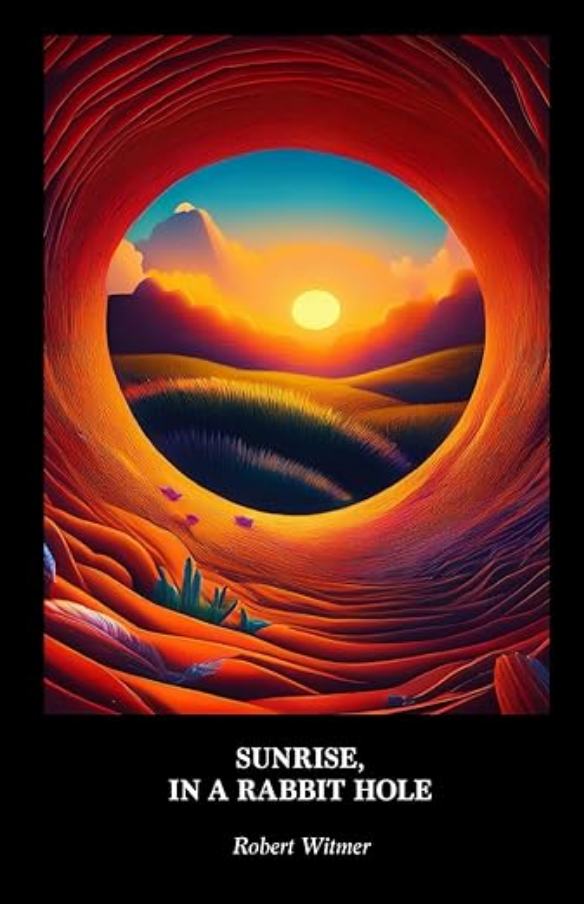
I expected something more grandiose than this rusty little gate with a broken latch. Maybe not grandiose, given the early emphasis on humility, but anyway something more befitting the occasion, more … revelatory. But here I am in the altogether, naked as the day I was born, though quite a bit more … developed I should guess, wondering whether to wait for someone to let me in or a great voice calling from on high or maybe just the soft bleating of a lamb, or perhaps I am supposed to continue up the narrow lane to the Big House and announce myself to the man in charge, declaring that I am ready to serve my life sentence. Not life exactly, and rather more than a sentence. More like a tome, an opus magnum, something like one of those Victorian novels with their elaborate constructions of minutia and the omniscient narrator who knows everything about everybody, where a poor guy from the sticks gets a job in a factory and, in the end, just has to accept things as they are. I decide to wait, and time passes. And passes. And passes. And, eventually, passes me by.
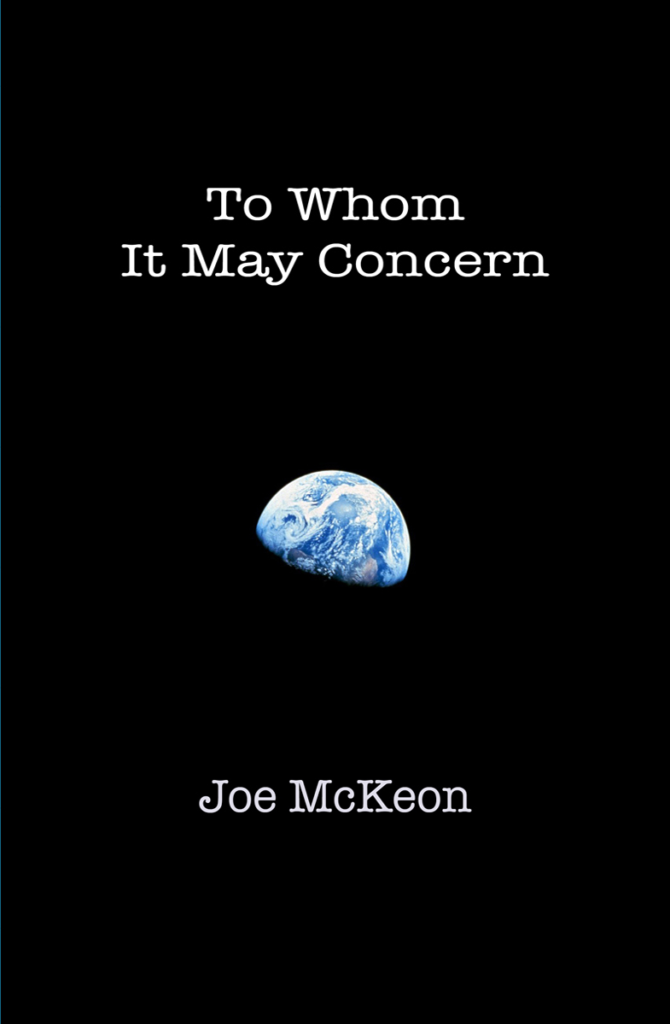
Edited by Christopher Bogart Paperback, 384 pages Published April 6, 2025 ISBN – 979-8315258650 Available on Amazon
Editor’s Introduction
This poetic anthology is designed to be a platform for poets from across the fifty states as well as the US Virgin Islands, to speak out against; and, in resistance to, Project 2025, as well as the agenda of Donald J. Trump.
The poems in this anthology are as diverse as the poets who wrote them. Represented in this diverse group are native and naturalized Americans, LGBTQ+, as well as diverse religious, ethnic and regional backgrounds. The poems are in a variety of different styles and formats that includes poetry with video links, haiku burned onto wood then photographed, as well as poetry of various shapes and sizes.
But all the poetry in this book is reactive to a “new America” that began on January 20, 2025 – an America that our Founding Fathers would barely recognize. With the extreme right-wing Project 2025 as a guide, this new America seems more like “the Upside Down,” the malevolent world of horrors depicted in the Netflix’s series, Stranger Things. This America is not the America of inclusivity memorialized in the words of The New Colossus at the base of The Statue of Liberty, “Give me your Tired, your Poor,” but the America of ICE raids, of racist rants, of detention camps, and of white supremacy, where many Americans are considered to be “polluters of the white bloodline” and who come from “shithole countries.” In this new Upside Down world, lies are more and more accepted as truths; the United States Constitution, that every political figure and every American in military uniform, swears to “preserve, protect and defend,” is defied or ignored. This is a world where our friends have become our enemies, and our enemies have now become our friends.
In her February 9, 2025 interview on Meet the Press, Amanda Gorman, the youngest Inaugural poet to serve in that role at the Biden Inauguration, when asked about the importance of poets and of poetry today, said this.
Poetry has consistently been the language of a people. I think it’s the reason why, when there’s protest, you will hear metaphor. You will hear they buried us, but they didn’t know we were seeds. The reason that there’s a poem and not a 36-page essay at the bottom of the Statue of Liberty, when we are trying, as a people, to speak to our best shared common humanity, typically, poetry is the rhetoric that encapsulates that the best. I think there’s something magical about it, that is humble, that is hopeful, but that’s also wounded enough to remind us of the past that we’ve stepped from and the future we want to move to.
If I might add to Amanda Gorman’s statement on the importance of poetry, in the chronicles of the major events in the history of the world, when the story is told, it is told in poetry.
And so I felt that it was time to let American poets have their say, “to speak to the American Conscience,” to remind them what the real purpose of this country has always been. Because to remain silent, is to consent.
In To Whom It May Concern, Joe McKeon brings the haiku form to bear on social issues in a format that both informs and engages. This work exemplifies the role poetry, particularly short forms such as haiku, tanka, and senryu, and more specifically, the voice of the poet, has to play in the future of this planet and the wellbeing of its inhabitants. A compelling read from cover to cover.
Richard Grahn Founder, The Abstractaphy Initiative
Walking Widdershins is comprised of 108 sets of collaborative tanka, a genre of Japanese short-form poetry more ancient than haiku. Historically, tanka were often exchanged between two poets as a kind of poetic conversation. The tanka conversations in this volume were written over the course of a single year and reflect the poets’ rootedness in the places where they live, their love for the natural world, and their concern for the havoc the human species is wreaking upon it. In his ‘Afterword,’ David C. Rice, tanka poet & editor, asks “If the root problem of our planetary crisis is that we see ourselves as separate from the natural world, not just another part of it, couldn’t two poets writing together offer poems that would help connect us with the natural world in ways an individual poet could not accomplish?” Four original, full-color mandala illustrations allow readers to visually enter and interact with the poetry.